
200-Hour Yoga Teacher Training
Hatha Yoga & Yoga Nidra
2027 Dates Coming Soon
21 Days | The Yoga Barn, Ubud, Bali | Yoga Alliance RYS 200
THE INVITATION
I invite you to step into a space of deep study and practice in Ubud, Bali, exploring the human system through three foundational pillars: Hatha, Nidra Shakti, and Classical Tantra.
Hatha Yoga serves as a comprehensive science that uses physical postures and breathwork to bring individual awareness into harmony with cosmic structures. This physical and energetic training is grounded in classical lineages, drawing directly from textual traditions like the Hatha Yoga Pradipika and the Gheranda Samhita.
Nidra Shakti is a deep state of consciousness, recognized in ancient texts as the Goddess herself, the resting awareness of Vishnu during cosmic intervals. We honor Her in this original form as a divine state of being, which was later refined into a precise method of deep relaxation. Practiced while resting comfortably as the breath naturally slows, the curriculum delivers the direct experience of Her restful presence alongside the practical teaching methodologies required to share this rest with others.
Classical Tantra focuses on the realization that consciousness is your inherent nature rather than a skill you must build over time. We integrate our practices with the Kashmir Shaivite non-dual view, anchoring your understanding in a philosophy that recognizes the extraordinary within the ordinary.
During this 21-day teacher training in Ubud, we study these three systems together to build a supportive, stable framework for your personal practice and your future students.
Ha and Tha embody the sun and the moon, effort and surrender, the breath exhaled and the breath returned. They are the father and mother principles of creation, manifesting directly within your body. Hatha is the sacred art of bringing these forces into absolute union.
CURRICULUM STRUCTURE
200 Hours.
Fully registered with Yoga Alliance. Upon completion you are eligible to register as an RYT-200 internationally recognised.
| CATEGORY | CONTENT |
|---|---|
|
Techniques, Training & Practice 100 hrs |
Asana, pranayama, mudra, mantra, kriya, relaxation techniques and Yoga Nidra practice. Nidra is woven into daily practice from day one. Every afternoon closes with a full Nidra. Students experience all seven stages progressively across the 21 days. |
|
Teaching Methodology 25 hrs |
How to sequence, cue, hold space, adjust safely, read a room, use silence. Includes dedicated methodology for guiding Yoga Nidra - voice, pacing, stage transitions, working with different populations. Peer teaching with feedback from day one in both Hatha and Nidra formats. |
|
Anatomy & Physiology 20 hrs |
Structural anatomy relevant to yoga. The nervous system, fascia, the breath body. The neuroscience of Yoga Nidra - the hypnagogic state, the vagus nerve, parasympathetic restoration, and why the body heals in stillness. How to teach safely for every body in the room. |
|
Yoga Philosophy, Lifestyle & Ethics 30 hrs |
Classical Tantra, non-dual philosophy, the Yoga Sutras, Hatha texts. Yoga Nidra philosophy runs throughout - from its origins as a divine state in the Upanishads, to Turiya and the Koshas as a living map of the practice. The Yamas and Niyamas as lived transmission, not lecture. |
|
Practicum 15 hrs |
Student-led classes observed and mentored, in both Hatha and Yoga Nidra. Students write and guide original Nidra scripts. Real teaching, real feedback. Dual-format practicum - Hatha sequencing and Nidra guiding. |
|
Yoga Nidra - Script Lab & Applications 10 hrs |
Dedicated workshop hours for deconstructing and rebuilding full Nidra scripts. Applications for pain, emotional turbulence, fatigue, menstrual health, menopause, digestion and immunity. Craft, study and guided application. |
THE FIRST PILLAR
Hatha Yoga
Ha is solar. Tha is lunar. The practice is their union.
Two currents. One body. One breath bringing them into harmony.
Hatha is a complete technology of awakening. Not of improvement. Awakening. It works on every layer of what you are: structure, breath, energy, mind. The six classical practices we teach are drawn from texts that have been alive for centuries. They are not new. They are original.
In this training you learn each one as a teaching instrument. A complete teacher carries the complete map.
Every session has a beginning and an end. How you open a practice matters as much as what lives in the middle. How you close it determines what your students carry home in their nervous systems. We study both. The art of arrival. The art of departure.
Relaxation is not optional. It is where the whole practice lands.
Asana. The Posture Science.
Classical and functional asana across all categories. Standing, seated, supine, prone, inversions, backbends, twists, forward folds. Alignment as the intelligent arrangement of energy through structure. Safe sequencing, modifications, hands-on assists. How to open a practice with intention and close it with care.
Pranayama. The Breath as Vehicle.
The full classical pranayama curriculum. Nadi Shodhana, Kapalabhati, Bhramari, Ujjayi, Sitali, Sitkari, Bhastrika, Sama Vritti. The science of breath retention. Kumbhaka. How to introduce pranayama safely. The nervous system science beneath the ancient language. Beginning and ending sessions with breath.
Mudra. The Language of the Hands.
Hasta mudras, Kaya mudras, Mana mudras and Bandha mudras. The classical gestures that seal and redirect prana. How to integrate mudra into asana, pranayama and meditation. What to explain. What to let people discover for themselves.
Mantra. Sound as Structure.
Vibration, resonance, the nervous system. Bija mantras and their elemental correspondences. Sanskrit pronunciation. How to open and close a class with mantra in a way that lands. Japa practice as meditation anchor. Teaching mantra with confidence and humility.
Kriya. The Purification Practices.
The classical Shatkarmas. Trataka, Neti, Kapalabhati as kriya, Agnisar. How to introduce these practices with care and context. A clean instrument sings more freely.
Relaxation. Opening and Closing the Space.
Systematic relaxation for the beginning and end of every session. Body scan, progressive muscular relaxation, 61-points, breath awareness, sensing techniques. How to bring a group into their bodies at the start and let the practice fully absorb at the end. The closing is the integration.
THE SECOND PILLAR
Yoga Nidra
Before it was a technique, it was a state of being. The oldest teachings describe this state as the Goddess Nidra Shakti, who appears as Vishnu's resting awareness between the dissolution and re-creation of worlds. She represents a state of being so complete and whole that nothing is absent from it. The technique itself serves as a method that points you back to Her.
At the threshold between waking and sleep, the thinking mind lets go while the body rests in deep stillness. As the breath naturally slows, awareness remains open, luminous, and present without effort. The brain moves from the frequency of daily life down into the theta state, allowing the nervous system to reorganize what it has been holding, and providing a space where your deepest intentions can take root. This is a precise technology of the original, untouched field of consciousness.
In this training, you learn to commune with Nidra Shakti as a personal practice and master Her application as a teaching instrument. You will learn how to guide others across this threshold with care and precision, understanding that your voice, your pace, and your silence become the practice just as much as the technique itself.
We explore the important transition between experiencing Nidra Shakti and teaching Her. You will learn how to recognize this state within yourself and create the safe conditions for others to find it. The curriculum demonstrates how Hatha prepares the physical body, how pranayama prepares the breath, and how Nidra Shakti receives what both practices have opened.
We study the architecture of physical relaxation, rotation of consciousness, breath awareness, pairs of opposites, visualization, sankalpa, and the return. Each stage carries a specific purpose, sequence, and quality of attention. Understanding this structure allows you to eventually teach from an intuitive place of feel rather than a rigid script.
This is the heartfelt resolve planted at the threshold of deep rest. You will learn how to help students find a resolve that is true to their current reality rather than merely aspirational, observing how this single practice can quietly reorganize a life.
We refine the practical elements of pace, tone, and the pause. You will discover how held silence can take a room deeper than any spoken instruction, how to read the collective energy of the room from behind closed eyes, and how to remain anchored inside the state yourself while guiding others through it.
The curriculum prepares you to share these teachings in general classes, therapeutic settings, and specialized environments for trauma, sleep, and fertility cycles. We cover how to adapt length, language, and depth for various audiences, alongside the art of writing and recording your own original practices.
THE THIRD PILLAR
Classical Tantra
Tantra is not something you add to a practice. It is something you remember underneath one.
The recognition at the heart of the Tantric view is this: consciousness is not something you develop. It is what you already are. The body is not something to transcend. It is the field through which the original nature pulses. Every sensation, every breath, every moment of contraction or expansion. None of it is outside the sacred. All of it is Shakti moving.
This changes how you stand at the front of a room.
In this training we explore Classical Tantra as a living orientation. Not as ritual or philosophy alone. As a way of seeing that returns everything, including the practice and the teacher and the room, back to what it originally is.
The View.
Non-dual recognition as foundation. One consciousness moving through all form. Including yours. Including your students'. Including the moment that feels like failure and the moment that feels like grace. The view does not create this. It remembers it.
Shiva and Shakti.
Pure awareness and pure energy. The still and the moving. The witness and the pulse. Every practice in this training is a dance between these two. Understanding this changes what you think you are teaching.
Spanda. The Sacred Pulse.
The primal vibration at the heart of all things. The hum of aliveness beneath every experience. What you feel when practice moves past technique into something living. We learn how to recognize it, how to create the conditions for it, how to let it lead.
Tantra in the Teaching Room.
How the Tantric view lives in practical teaching. Holding space without hierarchy. Meeting what arises without needing to move it. The body of the student approached with intelligence and reverence. The room as a field of mutual recognition.
The Texts.
A living encounter with the primary sources. The Vijñāna Bhairava Tantra, the Shiva Sutras, the Spanda Kartika, selected verses from the Tantraloka. Not as academic study. As transmission. Ancient language landing in a modern body.
Faculty
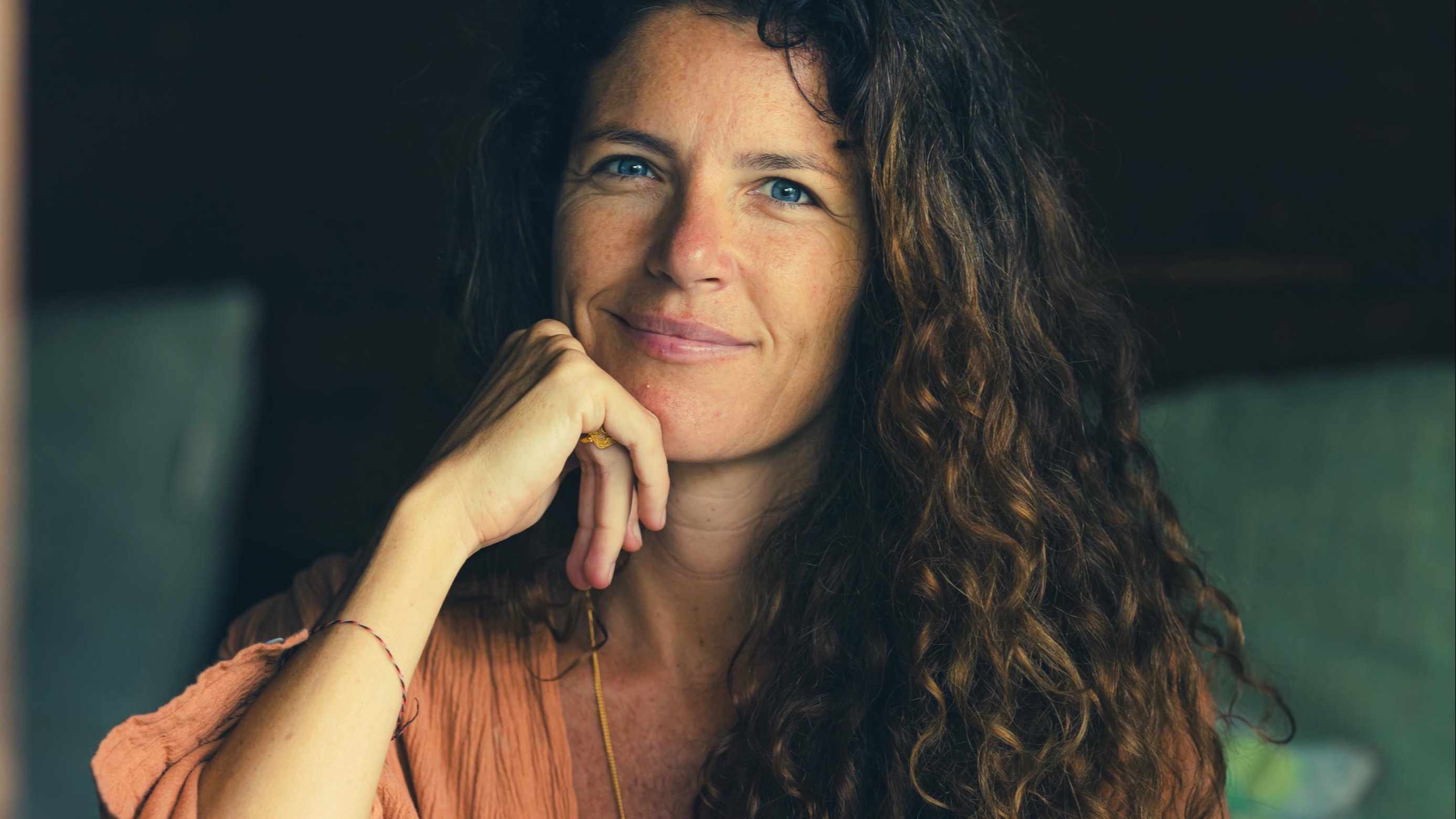
Hi, I'm Emily.
For nearly 20 years I’ve called the jungles of Bali home. The barefoot rhythm, local mysticism, and community here have shaped me as much as yoga itself.
My path with yoga began in my late teens, when practice opened profound shifts in body, breath, and awareness. After a radical shift in consciousness while studying in Santa Barbara, California, I moved to Bali in my early twenties in 2007, arriving just as the Yoga Barn and Bali Spirit Festival were being born. I became part of that community as a teacher and curator, and later founded High Vibe Yoga, offering 200-Hour Hatha & Meditation trainings, retreats and international workshops.
Over time my teaching evolved. Women’s SelfCare and Women’s Circles opened into larger inquiries on the thresholds of life. I began teaching through the gateways of sex, death, and wealth, not as taboos, but as potent forces of creativity, transformation, and freedom. These became the ground of my 300-hour Yoga of Sex, Death & Wealth training.
The pandemic years brought a personal turning: the sovereign birth of my daughter and a deeper devotion to community, mystery, and embodiment. Yoga Nidra came to the center of my work, offering rest and repair for the nervous system and healing for trauma, grief, and exhaustion.
Today I share classes, trainings, and retreats in Bali and internationally through Field of Origins, a living school of embodiment, devotion, and community.
When I’m not teaching, you’ll find me with my daughter, dancing, singing, cooking from the farm, or dancing like my life depends on it.
DAILY RHYTHM
How We Move Through Each Day
| TIME | SESSION |
|---|---|
| 07:45-9:45 | Morning Practice (Meditation, Mudra, Asana, Pranayama, Mantra) |
| 09:45-10:00 | Break |
| 10:00-11:15 | Theory (Philosophy & Anatomy) |
| 11:15-12:00 | Practicum & Kriya |
| 12:00-13:00 | Lunch & Rest |
| 13:00-14:00 | Yoga Nidra Lab (Guided Practice & Analysis) | 14:00-15:15 | Teaching Methodology & Script Lab |
| 15:15-15:30 | Break |
| 15:30-16:45 | Hatha Practice (Sequencing & Embodiment) |
| 16:45-17:00 | Closing Circle & Integration |
| 17:00 | Dismissal |
WHAT YOU RECEIVE
Everything You Need to Teach
RYT-200 Certification
Yoga Alliance recognised. Internationally valid. The credential that opens doors in every country and every studio.
200-Hour Training Manual
Your reference for life. Asana breakdowns, pranayama guides, mudra charts, mantra glossary, kriya instructions, relaxation technique scripts, sequencing frameworks, classical texts and classical Tantra philosophy teachings - all in one volume.
Yoga Nidra Script Library & Framework
Classical and original Yoga Nidra scripts across all seven stages. Specialised scripts for pain, fatigue, emotional turbulence, menstrual health, menopause, digestion and immunity. Plus the complete framework to write your own from the inside out.
Daily Lunch
Lunch at The Yoga Barn's delicious and vibrant Garden Kafe is included as part of your training.
21 Days at The Yoga Barn
One of the world's most beloved yoga centres. The rice paddies, the silence, the sangha - this place does half the work before you even roll out your mat.